Christmas and Friends Font Review for Festive Campaigns
Using Christmas and Friends Dingbats for Holiday Social Media Graphics
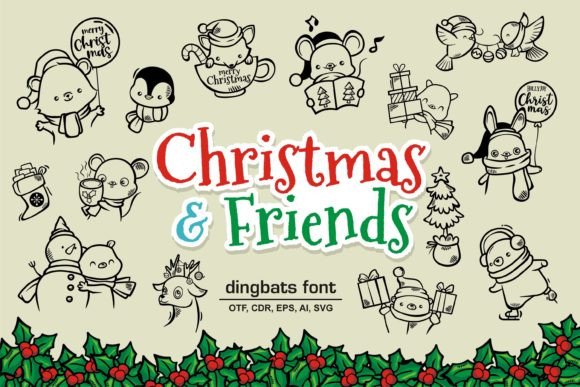
When I opened my design file last Tuesday to finalize a carousel post for a client’s seasonal sale, I realized our standard icon library felt too corporate and sterile for the warm, nostalgic vibe we needed. This is exactly where Christmas and Friends proved its value as a specialized asset in our creative workflow. As one of those rare Dingbats sets that actually feels handcrafted rather than digitally generated, this font bridges the gap between generic clip art and custom illustration. In the context of social media graphics, specifically Instagram carousels and Pinterest pins, these symbols serve as immediate visual anchors that stop the scroll without requiring complex custom vector work.
The collection brings together a stunning set of Christmas-themed dingbats, making it the perfect font for winter crafts, but from a marketing perspective, it functions as a high-efficiency branding tool. When designing a promotional graphic for a holiday webinar or an online shop update, I found that swapping out standard bullet points for the intricate ornaments and foliage glyphs within Christmas and Friends instantly elevated the perceived value of the content. It creates a cohesive visual language across multiple posts, ensuring that whether a user sees a Reel cover or a static feed post, they immediately recognize the seasonal campaign identity. For digital marketers managing tight deadlines, having a dedicated typeface that doubles as an illustration library significantly reduces production time while maintaining a premium aesthetic.
Christmas and Friends Fonts for Email Marketing and Digital Ad Banners
Integrating Christmas and Friends into email headers and digital ad layouts requires a strategic approach to balance festivity with conversion-focused clarity. During a recent A/B test for a holiday newsletter, we used specific glyphs from this font family as decorative dividers between product sections rather than solid lines. The result was a layout that felt sweet, festive, and warm, aligning perfectly with the emotional trigger of holiday shopping without sacrificing readability. Because these are true Fonts and not raster images, they remain crisp on high-resolution mobile screens and Retina displays, which is critical when your audience is scanning emails on their phones during a commute.
However, practical application in paid ads demands restraint. While Christmas and Friends offers beautiful detail, using these dingbats at extremely small sizes in Facebook sidebar ads or dense Google Display Network banners can lead to visual muddiness. In my testing, these glyphs perform best when given ample breathing room in hero banners, landing page headers, or large-format YouTube thumbnails. They excel as supporting visual elements that frame your primary call-to-action rather than competing with it. If you are designing a dark-mode compatible email template, ensure you test the contrast of these dingbats against deep greens or reds; sometimes adding a subtle outer glow or switching to a lighter weight variant ensures the intricate details don't get lost in the background color.
Pairing Christmas and Friends with Modern Typography Systems
No designer uses Christmas and Friends in isolation; successful campaign visuals depend entirely on how well these decorative Dingbats interact with your primary body copy and headline fonts. In a recent product launch campaign, I paired these festive symbols with a clean, geometric sans serif for the main offer text. The contrast between the organic, hand-drawn feel of the Christmas glyphs and the structured modernity of the sans serif created a sophisticated hierarchy that guided the eye naturally from the decorative element to the sales message. This pairing strategy prevents the design from looking like a homemade craft project and instead positions it as professional editorial design.
For brands leaning into a more traditional or luxury aesthetic, combining Christmas and Friends with a high-contrast serif font works exceptionally well for print collateral and high-end digital lookbooks. The key is to treat the dingbats as graphical accents—similar to how you would use a logo mark or a custom border. Avoid placing these detailed symbols directly adjacent to dense paragraphs of text, as the visual complexity can reduce reading speed. Instead, use them to punctuate section breaks, highlight special offers, or create custom list markers. When building branded templates for Canva or Figma, pre-setting these pairings ensures that junior designers or social media managers can maintain brand consistency without accidentally creating cluttered compositions that dilute the campaign's impact.
Licensing and Technical Specs for Commercial Christmas and Friends Use
Before deploying Christmas and Friends across client campaigns or merchandise, verifying the commercial licensing and technical specifications is a non-negotiable step in the procurement process. As with all premium Fonts, understanding whether your license covers digital ads, physical products, and template redistribution protects your agency or business from future legal complications. I always recommend checking if the license includes webfont files (WOFF/WOFF2) if you plan to use these dingbats as live text on a website header, as relying solely on image exports can hurt SEO and accessibility scores. Additionally, confirm if the set includes alternate characters or ligatures, as having access to varied ornament styles allows for greater customization in repetitive layouts like advent calendars or daily countdown series.
From a technical workflow standpoint, ensure your design software supports OpenType features to access the full range of glyphs hidden within Christmas and Friends. Many designers miss out on bonus elements because they only type standard keystrokes; using the Glyphs panel in Illustrator or the Character Map in other tools reveals the full depth of this stunning set. Also, consider the file format compatibility for your team’s ecosystem. If your social media strategist needs to create quick stories on a mobile app but the font is only available in OTF format for desktop Adobe apps, you may need to export transparent PNG assets of the most-used dingbats beforehand. Planning these technical logistics early ensures that the sweet, festive charm of the font translates smoothly from concept to final published campaign without friction.
When to Avoid Christmas and Friends in Professional Brand Design
While Christmas and Friends is an incredible asset for seasonal warmth, recognizing when not to use it is just as important for maintaining professional credibility. These Dingbats are inherently informal and illustrative, making them unsuitable for dense informational content, legal disclaimers, pricing tables, or formal corporate communications regarding shipping policies or return windows. Attempting to force this festive style into data-heavy infographics or serious B2B whitepapers creates cognitive dissonance that can confuse the audience and undermine trust. In my experience, this font performs poorly when scaled down below 24pt in digital formats, as the fine lines and intricate details begin to pixelate or disappear entirely on standard monitors.
Furthermore, avoid using Christmas and Friends as a replacement for functional UI icons in app design or website navigation. Users rely on universal semiotics for interface elements like search bars, cart icons, or menu hamburgers; substituting these with stylized holiday dingbats increases cognitive load and hurts usability metrics. Reserve this typeface for moments of delight and celebration—hero images, thank-you pages, gift guides, and limited-time event branding. By respecting the boundaries of what this font is designed to do, you preserve its impact. When used selectively as a seasonal accent rather than a crutch for every design problem, Christmas and Friends remains a powerful tool for creating memorable, emotionally resonant campaigns that convert viewers into engaged customers.